


What First Aid Signs Should Every Workplace Have?
What first aid signs should every workplace have? Identify essential UK first aid, eyewash, AED and emergency signs for clear, safer premises every day.
Get free delivery on orders over £35

Official member of the Made In Britain organisation
Automatic discounts of up to 30%
Secure online checkout
Order before 2pm weekdays for same day dispatch
First Aider Signs
Ensure your workplace remains compliant and safe with our First Aider Safety Signs. Perfect for offices, schools, construction sites, and industrial settings, these signs clearly identify first aider personnel and equipment according to HSE guidelines. Available in durable materials—vinyl, plastic or aluminium—and symbol-rich designs as per ISO 7010/BS EN standards, they guide swift emergency response and enhance visibility. Customisation available on request.
First aid arrangements are only effective if people can find the equipment, facilities and assistance provided.
Clear first aid signage can help employees, visitors, contractors and temporary workers quickly locate first aid boxes, treatment areas, eyewash stations, defibrillators and trained first aiders.
The first aid signs appropriate for an individual workplace will depend on its first aid needs assessment, layout, workforce and the hazards present.
Our range includes:
First aid equipment is of limited value if people cannot find it quickly.
First Aid Location signs can identify first aid boxes, cabinets, treatment points and other facilities. In larger workplaces, directional signage can also help guide people from corridors, work areas and entrances to the nearest first aid provision.
Position signs where they can be clearly seen before someone reaches the equipment or facility.
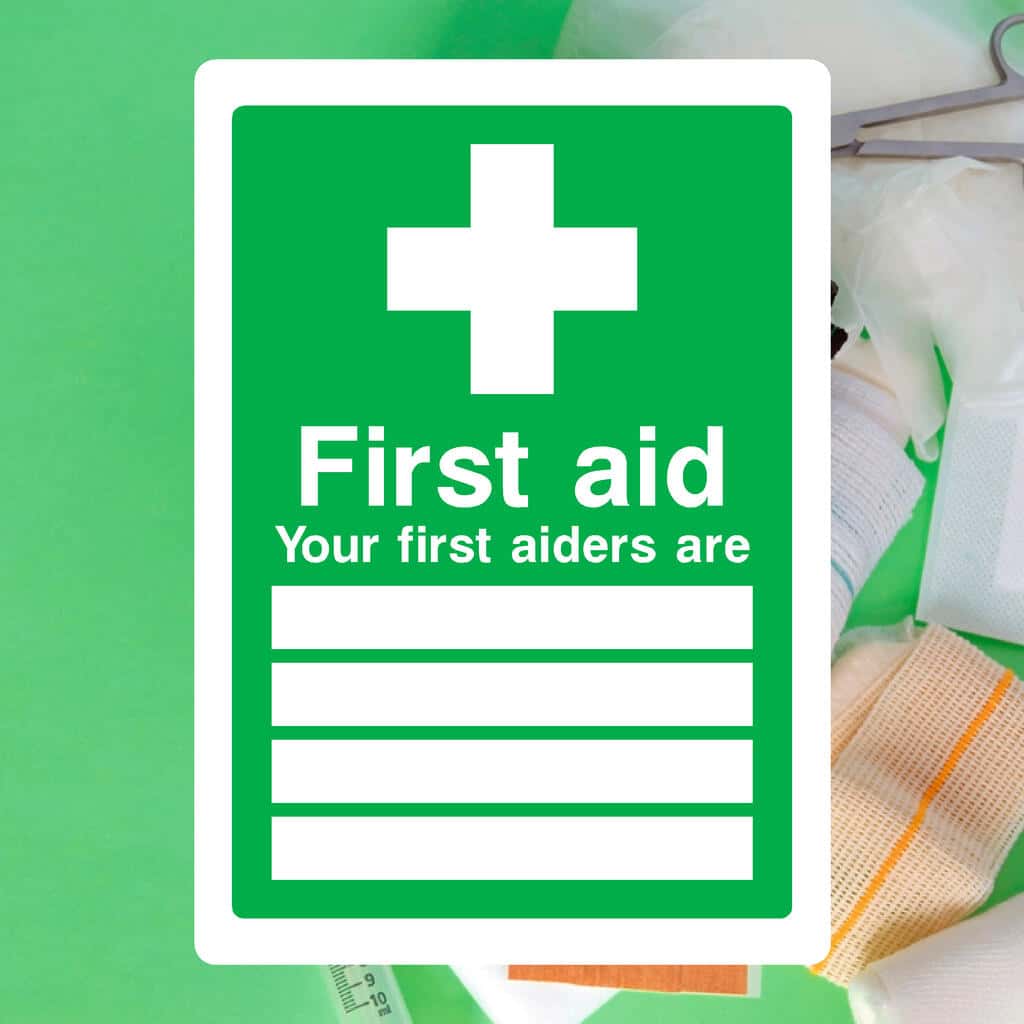
First Aider signs help employees and visitors identify who can provide first aid assistance or where information about trained first aiders can be found.
Depending on your workplace arrangements, signs may identify individual first aiders, provide names and contact details or direct people to the location where first aid assistance is available.
Keeping this information current is particularly important when personnel, shifts or workplace arrangements change.
Where a workplace has a designated first aid room, clear signage can help people locate it without unnecessary delay.
A sign on the room door may be sufficient in a simple layout. Larger workplaces may also benefit from directional signs at corridors, junctions or other decision points so someone unfamiliar with the building can find the room quickly.
AED and Defibrillator signs identify the location of automated external defibrillators so they can be found quickly in an emergency.
Consider whether the AED is immediately visible from normal circulation areas. Where it is positioned inside a cabinet, around a corner or away from the main route through a building, additional directional signage may make its location clearer.
Workplaces where employees may be exposed to substances or processes that create a risk of eye injury may provide eyewash facilities or other emergency equipment.
Eyewash and emergency-equipment signs help identify these facilities quickly. Signage should support the emergency arrangements and control measures identified for the workplace rather than replace appropriate equipment, procedures or training.
First aid and emergency-facility signs are generally classed as safe condition signs and use a green-and-white format.
Recognised graphical symbols can make important facilities easier to identify quickly, particularly for visitors, contractors and employees who may not be familiar with the premises.
BS EN ISO 7010 provides standardised graphical safety symbols used for safety information. The signs appropriate for your workplace should reflect your first aid arrangements, needs assessment and the facilities actually provided.
Place first aid signs where they can be seen clearly and where people are likely to look for assistance.
Depending on the premises, suitable locations can include:
Think about the route someone unfamiliar with the premises would take. If a first aid facility cannot be seen directly, directional signage may help people find it more quickly.
Choose the sign according to the facility or information you need to identify.
Consider:
Larger workplaces may require several signs to create a clear route to the first aid facility rather than relying on a single sign at the final destination.
Self-adhesive vinyl is suitable for clean, smooth surfaces and many indoor applications.
Rigid plastic provides a durable option for walls, doors and general workplace use.
Aluminium composite provides a strong rigid solution for demanding environments and longer-term installations.
Choose a material appropriate for the mounting surface, environment and expected lifespan of the sign.
The Sign Shed manufactures signs in Yorkshire and is a registered member of Made in Britain.
Our range of first aid signs is suitable for offices, warehouses, schools, factories, construction sites, leisure facilities and other workplaces, with a choice of sizes and materials to suit different locations.
Bulk discounts are available for larger orders and multi-site requirements.
From The Sign Shed blog
Not sure which first aid signs you need or where they should be displayed? Our practical guides cover first aid signage for UK workplaces, warehouses and schools, with advice on choosing and positioning signs for first aid equipment, facilities and trained first aiders.
What first aid signs should every workplace have? Identify essential UK first aid, eyewash, AED and emergency signs for clear, safer premises every day.


