





No Entry, No Access or Keep Out? Choose wording for the actual restriction
Choose access wording from the people, route and permission involved, rather than treating similar phrases as fixed legal categ...
Get free delivery on orders over £35

Official member of the Made In Britain organisation
Automatic discounts of up to 30%
Secure online checkout
Order before 2pm weekdays for same day dispatch
No Entry & Access Signs
Control who can enter your workplace, site or restricted area with our range of No Entry & Access Signs. Choose from No Entry, Keep Out, No Access, Authorised Personnel Only, Staff Only, No Pedestrians and other access-control messages for doors, gates, warehouses, construction sites and private premises.
Made in Britain by The Sign Shed, our access signs are available in a choice of sizes and durable materials for indoor and outdoor locations. Whether you need to stop entry completely or make it clear who is permitted beyond a particular point, you can choose signage to match the restriction at your premises.
Not every access restriction needs the same sign. Choosing wording that accurately describes who can and cannot enter makes the instruction easier to understand.
Choose a No Entry sign where people, vehicles or a specified group must not proceed beyond a particular point. They can be used at doors, gates, site entrances, restricted routes and controlled areas.
A No Access sign is useful where a particular entrance, route or area must not be used. These signs can help prevent people from entering private, operational or potentially hazardous areas.
Choose a Keep Out sign when you need a direct instruction for people to remain outside an area. Typical locations include construction sites, plant areas, maintenance zones, private property and other controlled locations.
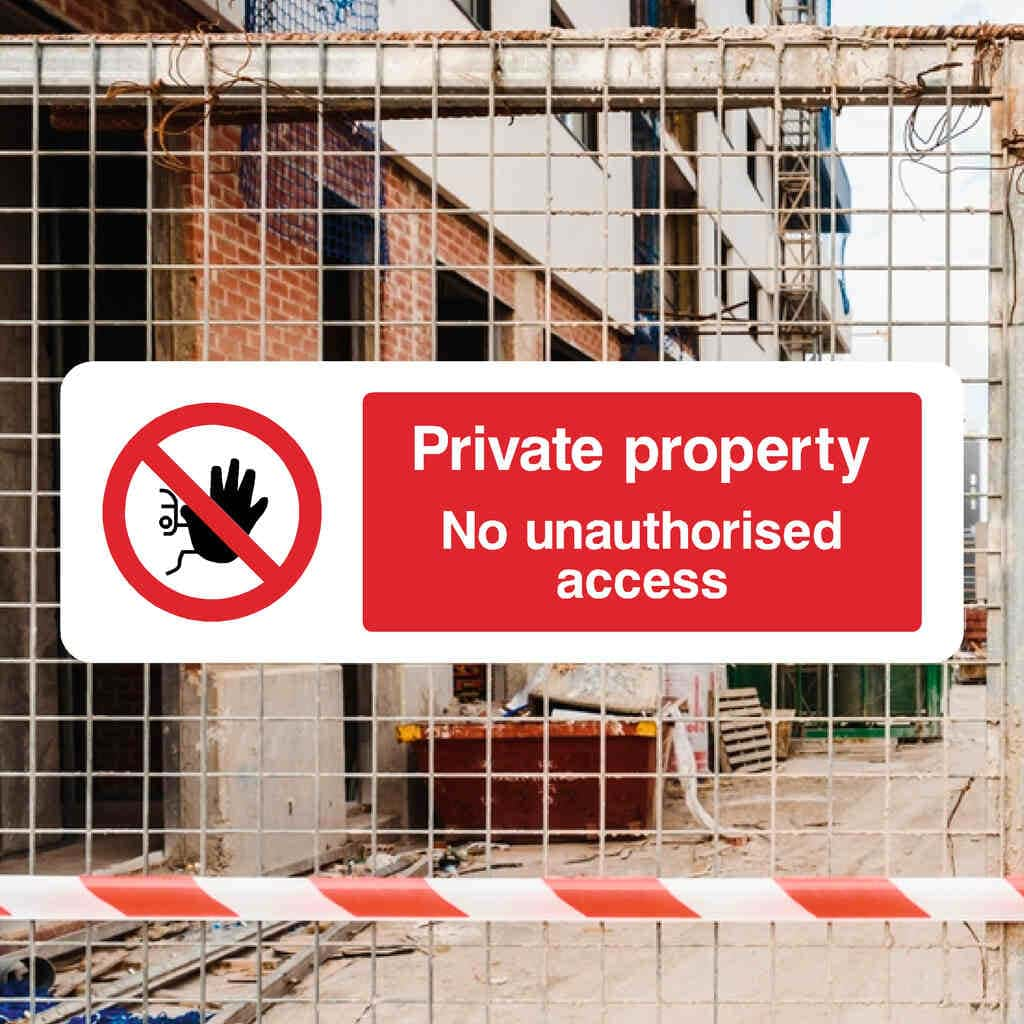
Use No Unauthorised Access where entry is permitted, but only to people with the appropriate permission. This wording can be particularly useful for warehouses, factories, plant rooms, workshops and other operational areas.
An Authorised Personnel Only sign clearly identifies areas intended for approved, trained or designated personnel rather than visitors or members of the public.
Choose Staff Only for workplaces where customers, visitors or members of the public should not enter employee areas such as stockrooms, offices, kitchens, service corridors and back-of-house areas.
Use a No Pedestrian sign when the restriction applies specifically to people on foot. They can be particularly useful around vehicle routes, loading areas, industrial yards, warehouses and construction sites.
No Admittance signs provide a clear restriction at controlled entrances and restricted areas. Where entry depends on a particular condition, choose wording that explains the requirement, such as authorised personnel, protective equipment or permission to enter.
Choose access wording from the people, route and permission involved, rather than treating similar phrases as fixed legal categ...

Connect a no unauthorised access sign with a clear permission process, rather than assuming every employee or contractor may en...

Map each restricted boundary and approach, then place authorised personnel signs where people can understand the rule before en...

Use a Keep Out message where it accurately describes the restriction, supported by a clear boundary and appropriate physical co...

Prohibition signs communicate an action that must not be taken. Choose the appropriate symbol and check the controls behind the...

An access restriction needs accurate wording and a clear boundary. Distinguish a prohibition from a hazard warning or a simple ...
Access signs help make it clear where people can go, where they must stop and whether permission is needed before entering an area.
The right message depends on the restriction. A general No Entry sign may be appropriate where entry is prohibited, while No Unauthorised Access or Authorised Personnel Only may be clearer when approved people are still allowed through.
The Sign Shed supplies access signage for businesses, construction sites, warehouses, factories, offices, schools, farms, private property and other locations where access needs to be managed.
Workplaces often contain areas that should not be accessible to everyone. Plant rooms, warehouses, workshops, machinery areas, stockrooms, service corridors and operational areas may all require some form of access control.
Signs can help reinforce physical measures such as doors, gates, barriers and access-control systems by making the restriction clear before somebody enters.
Choose the wording that most accurately describes the rule at that location rather than automatically using a general No Entry message.
Construction sites can have changing hazards, vehicle movements, restricted work areas and locations that should only be entered by authorised personnel.
No Entry, Keep Out, No Unauthorised Access and construction access signs can be positioned at entrances, gates, hoardings and restricted zones to help communicate site rules.
Depending on the risks and site arrangements, access signage may be used alongside construction warning signs, mandatory PPE signs and site safety boards.
Warehouses and industrial premises often need to separate pedestrians from vehicles and prevent unauthorised people from entering operational or hazardous areas.
No Pedestrians, No Entry and Authorised Personnel Only signs can help communicate these restrictions at loading areas, vehicle routes, machinery zones, plant rooms and other controlled locations.
Not every access restriction involves an industrial hazard.
Staff Only, Private, No Entry and Authorised Personnel signs can help prevent customers and visitors from entering stockrooms, kitchens, offices, service areas and other parts of a building that are not open to the public.
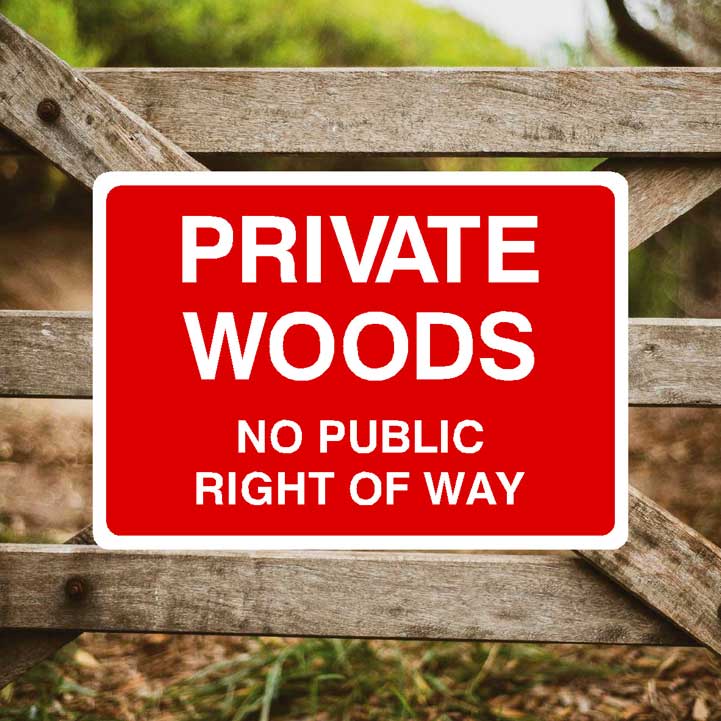
Access signs can also be used at private premises, yards, roads, car parks, gates, farmland and other privately controlled locations.
Choose wording that reflects what you actually need to communicate. No Entry or Keep Out provides a direct restriction, while Private Property or No Unauthorised Access may be more appropriate where permitted users still require access.
Think about how far away somebody will be when they need to see the sign.
A small sign may be suitable for a door or indoor location where people approach at close range. Larger signs are generally easier to notice at gates, site entrances, fences, industrial premises and locations where they need to be recognised from further away.
Also consider whether anything could obscure the sign and whether people will approach from more than one direction.
The location and expected lifespan of your sign should influence the material you choose.
Self-adhesive vinyl is useful for suitable clean, smooth surfaces and many indoor applications.
Rigid plastic provides a lightweight option for general workplace signage.
Recycled plastic offers another rigid option for businesses looking to consider the materials used in their signage.
Aluminium composite provides a robust option for outdoor and demanding environments where greater rigidity and durability are required.
Check the individual product options to see which materials and sizes are available for your chosen sign.
Position an access sign so that somebody can see and understand the restriction before they enter the controlled area.
Depending on the location, this could be on a door, wall, gate, fence, barrier, hoarding or at an entrance to a particular route or work area.
Avoid locations where the sign can easily be hidden by an open door, parked vehicle, equipment or other obstruction.
For larger sites, you may need signs at more than one approach point so that the restriction remains clear whichever direction somebody arrives from.
Our No Entry and access signs are manufactured in Yorkshire by The Sign Shed, a member of Made in Britain.
With a wide choice of messages, sizes and materials, you can select access signage suited to everything from an office door to a construction-site entrance.
Need wording that you can't find in our standard range? Choose a custom sign to create an access message specific to your premises.