

FREE DELIVERY
Get free delivery on orders over £35

Made in britain
Official member of the Made In Britain organisation
BULK SAVE
Automatic discounts of up to 30%
SECURE CHECKOUT
Secure online checkout
FAST DISPATCH
Order before 2pm weekdays for same day dispatch
Accessible Entrance Signs
Shop Accessible Entrance Signs to help visitors, customers and employees quickly find wheelchair-accessible entrances, ramps and alternative access routes.
Choose clear directional signs for accessible entrances and ramp access, including left and right arrows and wheelchair-access symbols. Made in Britain by The Sign Shed, with durable options for doors, walls, gates and outdoor approaches.
refine your search
Accessible Entrance Signs for UK Premises
Clear Accessible Entrance Signs can help visitors, employees and customers identify wheelchair-accessible entrances, ramps and alternative routes into a building.
The most effective signage doesn't simply identify the accessible door. It helps people find the route needed to reach it.
Signposting an Accessible Entrance
Start from the point where visitors normally arrive.
If the accessible entrance is immediately obvious, clear identification at the entrance may be sufficient. Where it is located elsewhere, directional signs can help guide visitors from car parks, site entrances, pathways and other approaches.
Pay particular attention to places where someone needs to choose between different routes.
Accessible Entrance Direction Signs
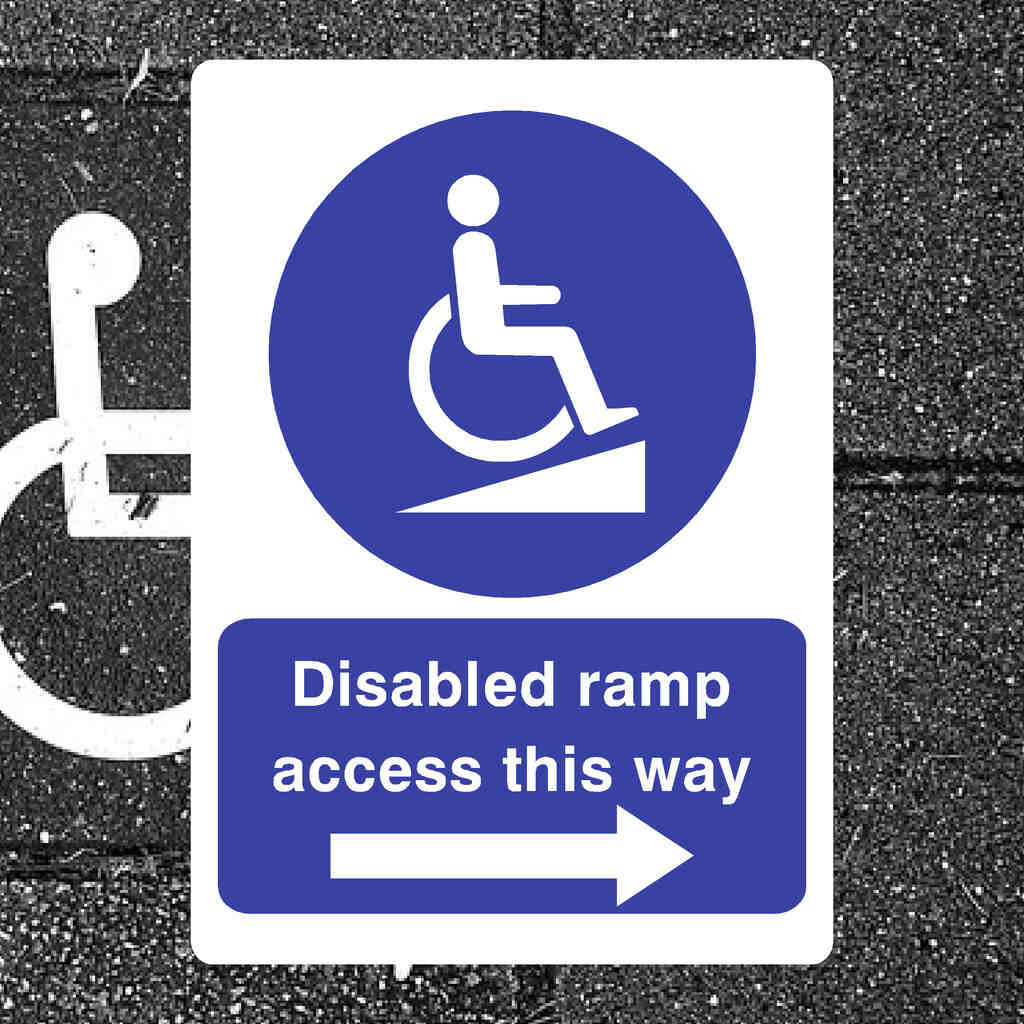
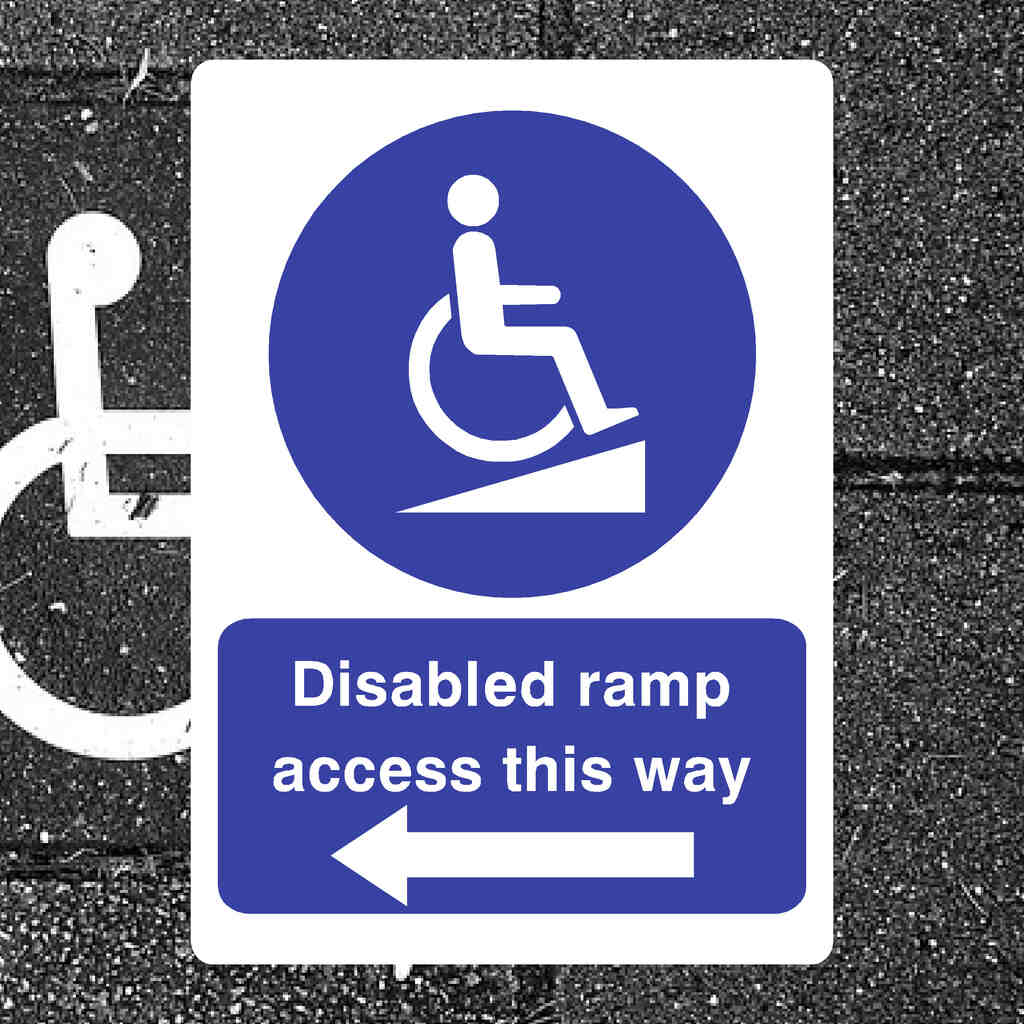
Directional wheelchair access signs can show whether an accessible entrance or ramp is to the left, right or ahead.
Position directions before a junction or change of route so visitors receive the information before they need to decide which way to go.
If the route changes direction more than once, additional signs may be useful to create continuous wayfinding towards the entrance.
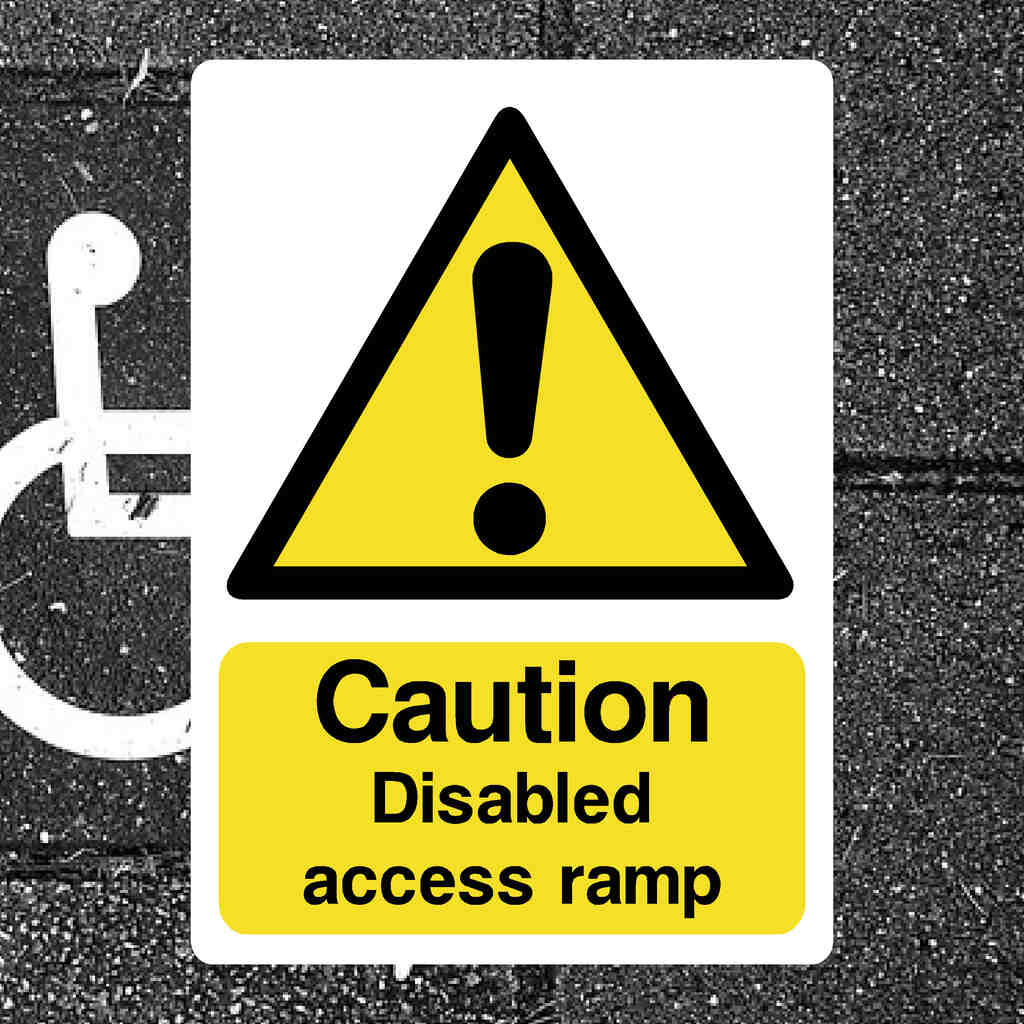
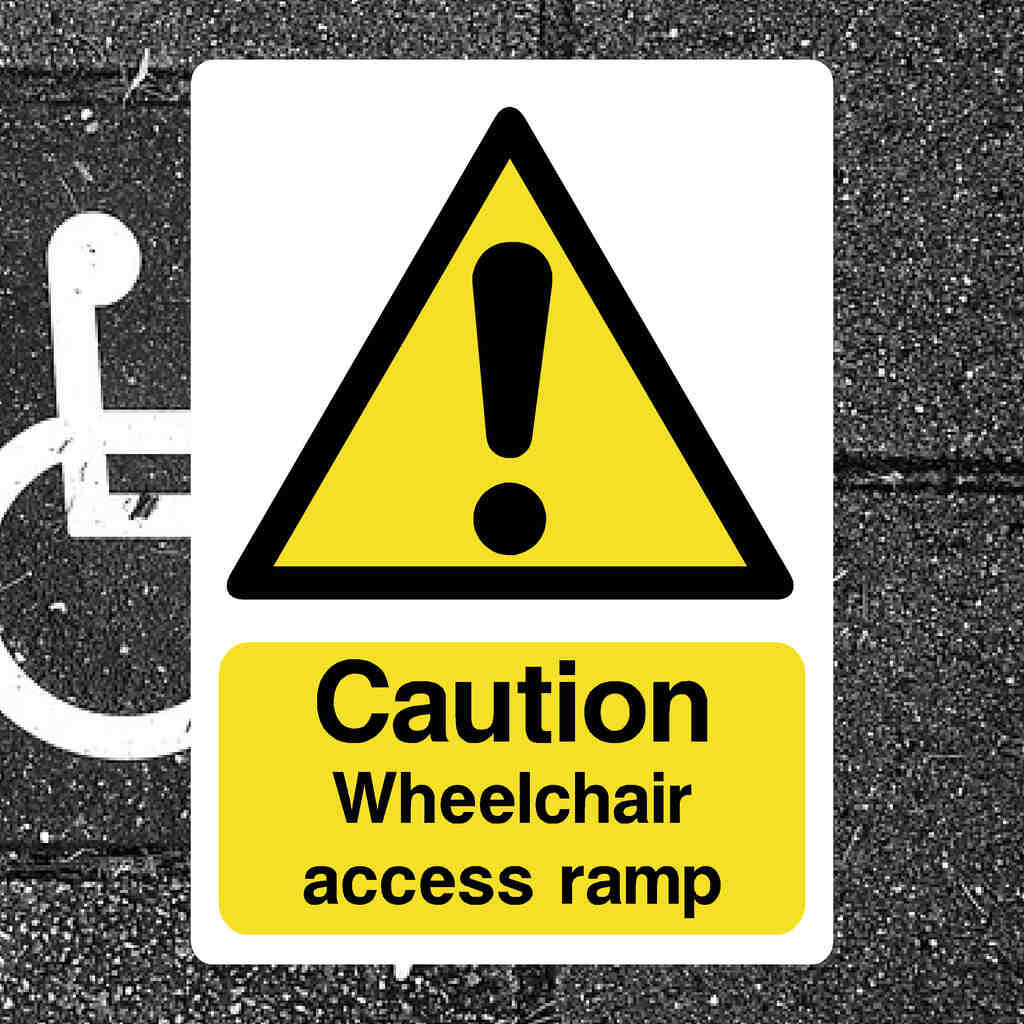
Wheelchair Ramp Signs
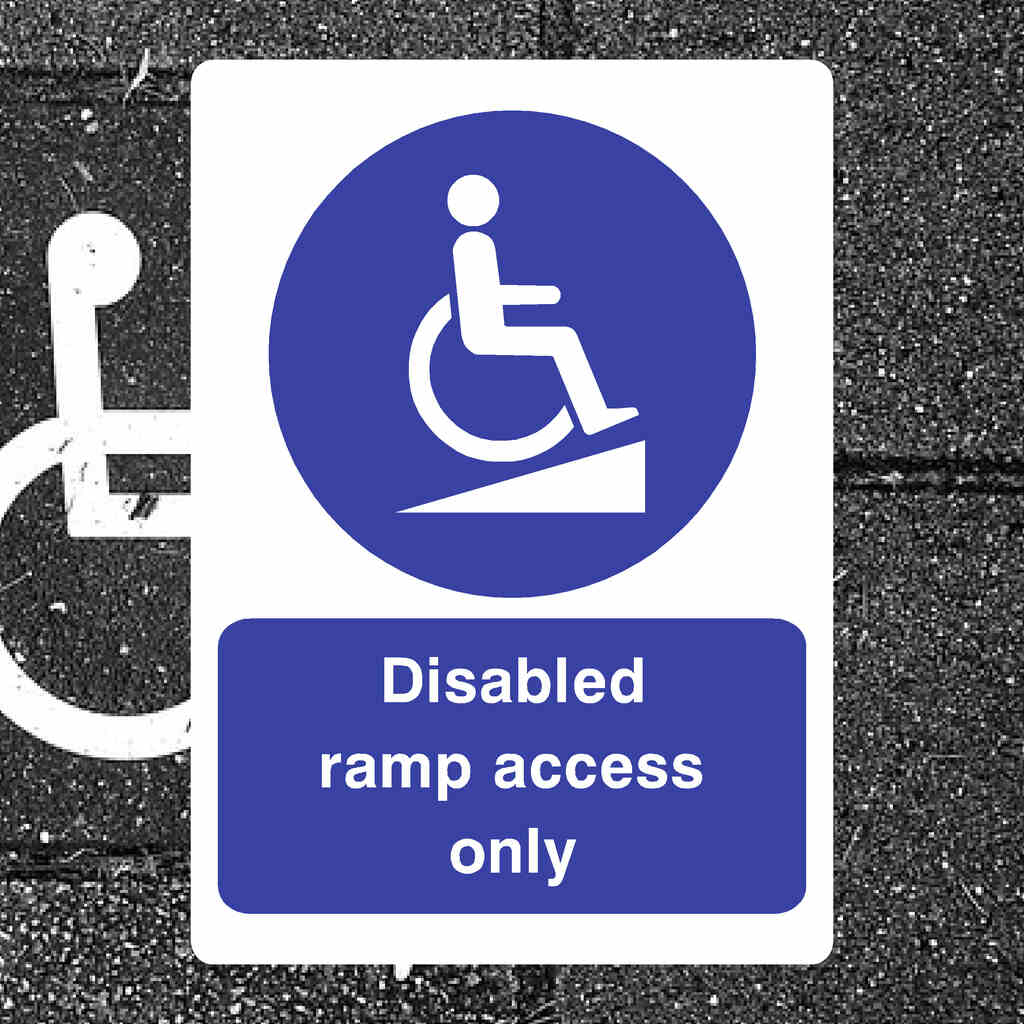
Where a ramp provides accessible access to a building, clear signage can help visitors locate it.
A sign beside the ramp identifies the facility, while directional ramp signs can be used where the ramp isn't visible from the normal approach.
Consider the complete journey from the visitor's arrival point rather than treating the ramp as an isolated destination.
Alternative Accessible Entrances
Some premises use a separate accessible entrance where the principal entrance cannot provide suitable access.
In these situations, make the alternative route clear before visitors reach an entrance they cannot use.
Depending on the premises, signs may be appropriate at the site entrance, car park, principal entrance and any junctions leading towards the accessible entrance.
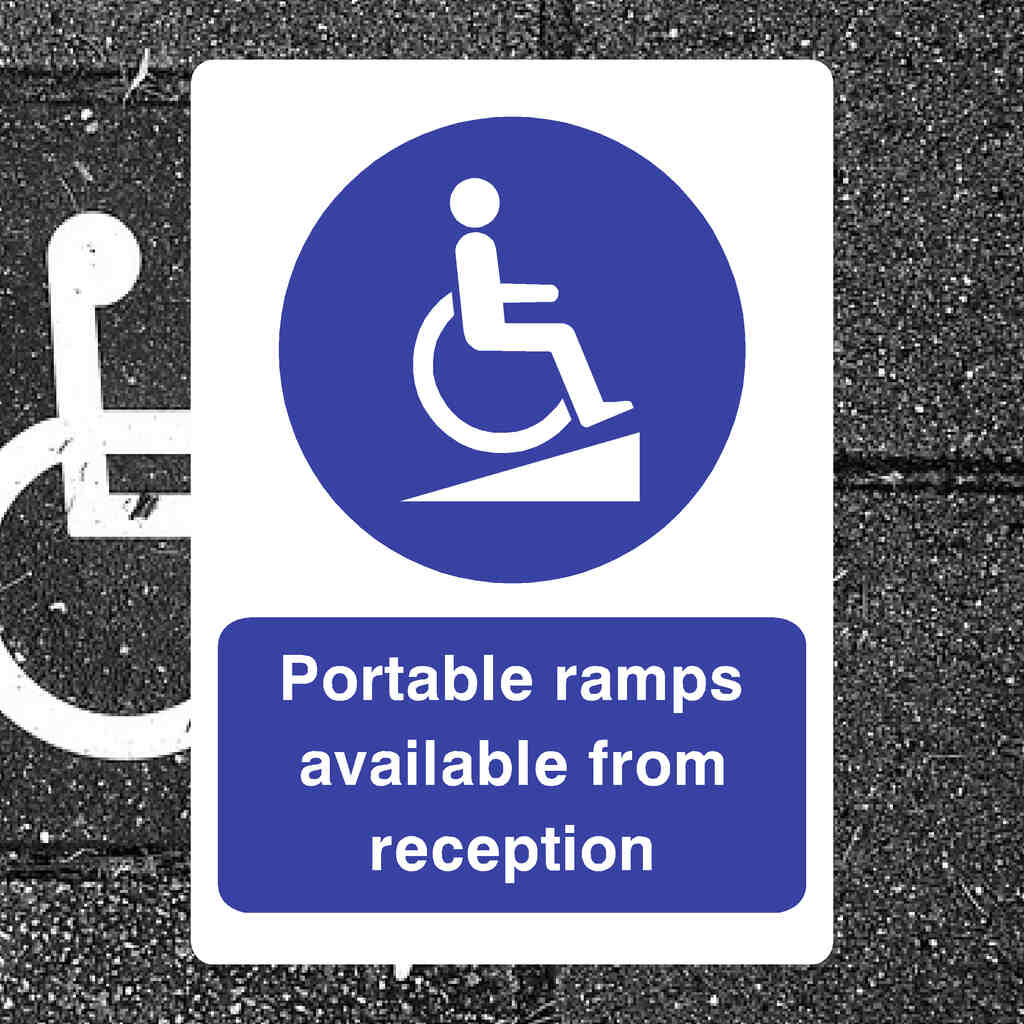
Portable Ramp Signs
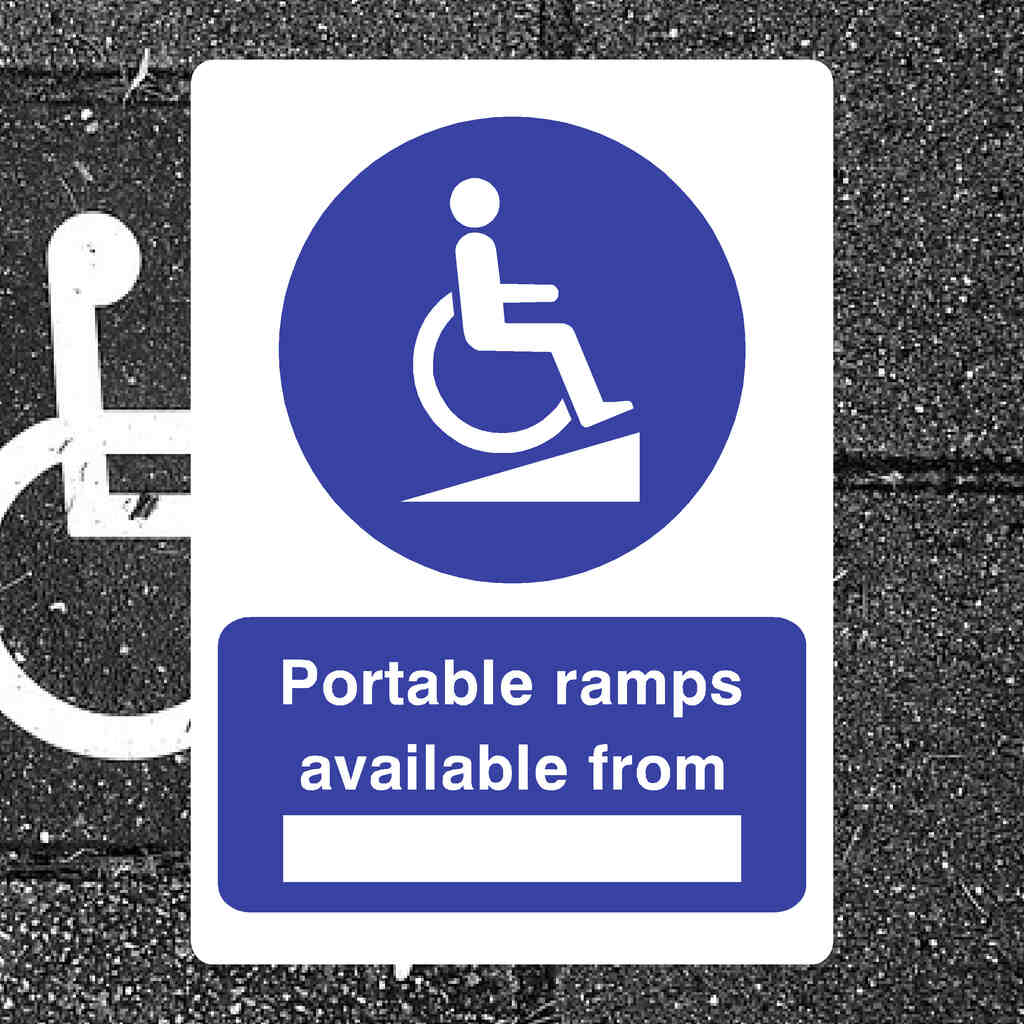
Where a portable ramp is available rather than permanently installed, visitors need clear information about how to access it.
Signs such as Portable Ramps Available or Portable Ramps Available From Reception can help explain what assistance is available and where it can be requested.
Choosing the Right Sign
Before ordering, ask three questions:
Where will someone first need the information?
Which direction do they need to travel?
Can they see the destination from that point?
Then choose the wording, arrow direction, sign size and material to suit the location.
Indoor entrance signs may be viewed from close range, while external signs across a car park or site approach may need to be larger and more prominent.
Made in Britain Accessible Entrance Signs
The Sign Shed manufactures accessible entrance, wheelchair access and ramp signs in Britain, with options suitable for doors, walls, gates and external locations.
Choose the message and direction that matches your premises, then select an appropriate size and material for where the sign will be displayed.
Accessible Entrance Signs FAQs
Get quick solutions to your common accessibility sign buying questions
An Accessible Entrance sign identifies an entrance that provides accessible access into a building or directs visitors towards one.
These signs commonly use the recognised wheelchair accessibility symbol and may include wording or directional arrows to help visitors locate the correct entrance.
Display Accessible Entrance signs where visitors need the information.
This might include the accessible entrance itself, car parks, site entrances, pedestrian approaches or points where the accessible route separates from the main route.
If the entrance isn't immediately visible, directional signs can help create a clear route towards it.
Start from the route visitors would normally take towards the building.
If the principal entrance isn't accessible, provide clear directions towards the alternative accessible entrance before visitors reach a point where they cannot continue.
Additional signs may be useful wherever the route changes direction.
Where identification isn't already clear, a sign at the accessible entrance can confirm that visitors have reached the correct door.
If directional signs have been used along the route, identifying the destination also provides a clear end to the wayfinding journey.
Use an arrow when the sign needs to direct somebody towards an entrance that isn't immediately obvious.
For example, you might use a left or right arrow where the accessible entrance is around another part of the building.
A directional arrow may not be necessary when a sign is simply identifying the entrance directly beside it.
Position directional signs before someone needs to decide which way to go.
Typical locations include path junctions, car parks, site entrances, building approaches and points where the accessible route separates from another route.
If the route changes direction again, consider whether another sign is needed to continue the wayfinding.

