










18 June 2026
Photoluminescent Fire Signs Review
Photoluminescent fire signs review for UK buyers - materials, compliance, visibility, placement and where glow signs work best in real premises.
Get free delivery on orders over £35

Official member of the Made In Britain organisation
Automatic discounts of up to 30%
Secure online checkout
Order before 2pm weekdays for same day dispatch
Glow Fire Exit Signs
Shop Glow Fire Exit Signs for UK workplaces and premises. Our photoluminescent fire exit signs clearly identify escape routes and directions, with a visible afterglow that helps important emergency escape information remain easier to identify when lighting levels fall.
Made in Britain by The Sign Shed, our glow fire exit signs are available in Class B and Class C photoluminescent materials, with a choice of directional arrows, messages and sizes for different escape routes and building layouts.
Glow fire safety signs, also known as photoluminescent fire signs, absorb energy from ambient light and release it as a visible afterglow when surrounding light levels fall. This makes important fire safety information easier to identify during low-light conditions or a loss of normal lighting.
Our range includes photoluminescent fire exit signs, fire door notices, fire action signs, extinguisher identification signs and other fire safety messages for offices, warehouses, factories, schools, healthcare premises, hospitality venues and other workplaces and managed buildings. Choose from a wide selection of messages and sizes manufactured in Britain by The Sign Shed.
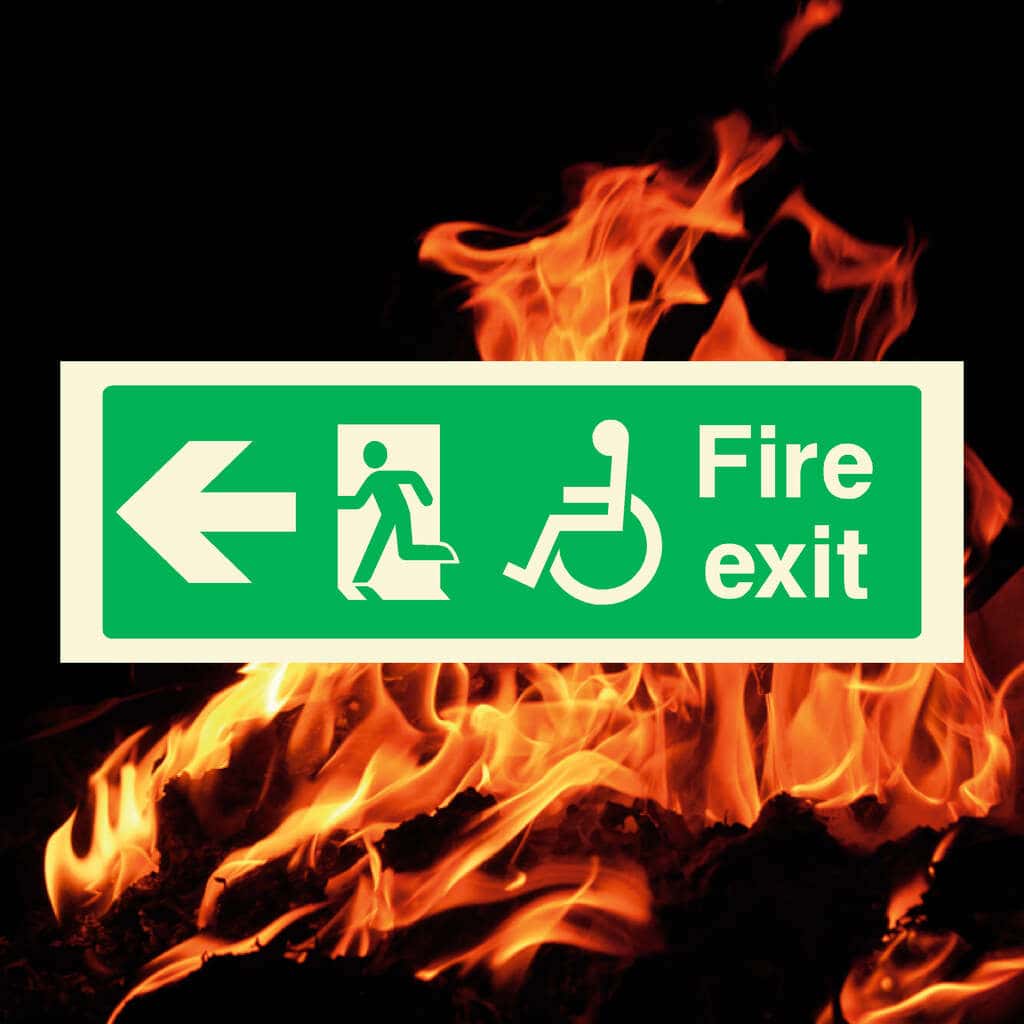
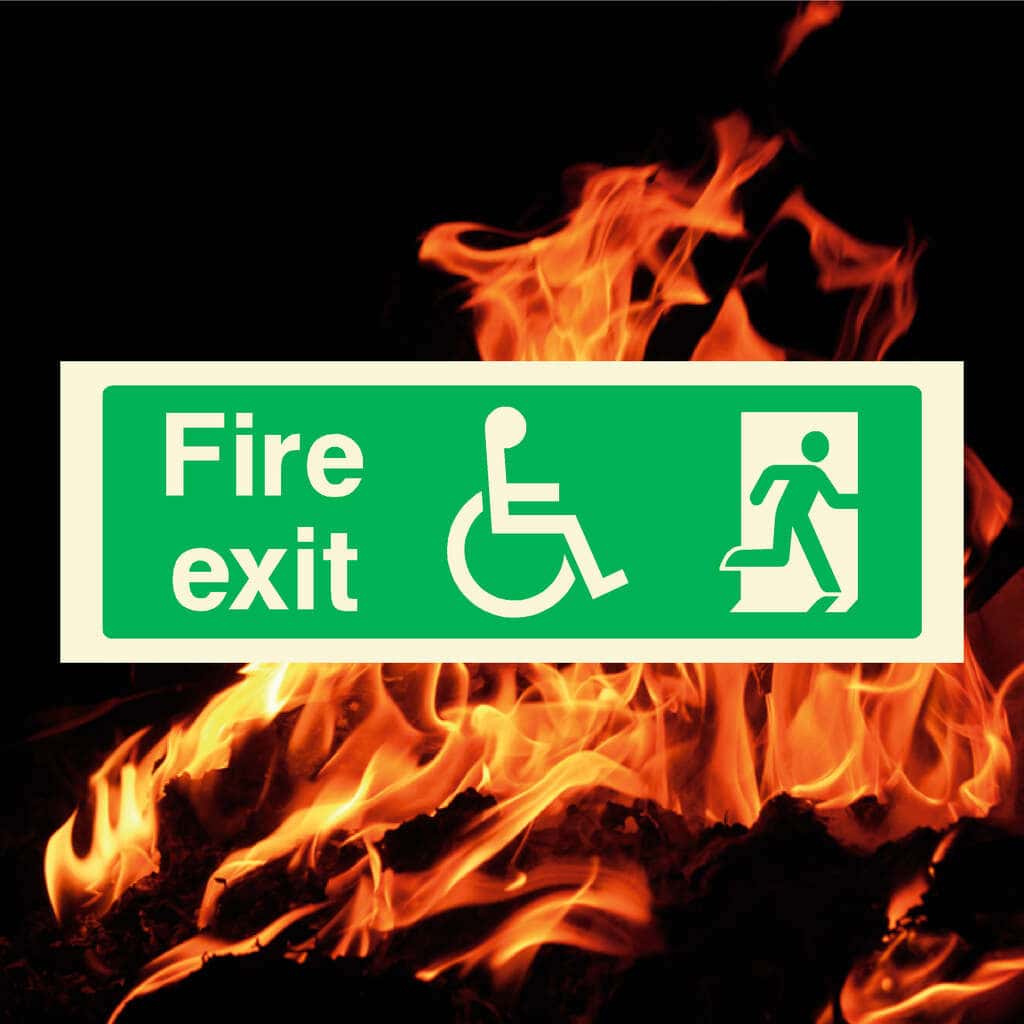
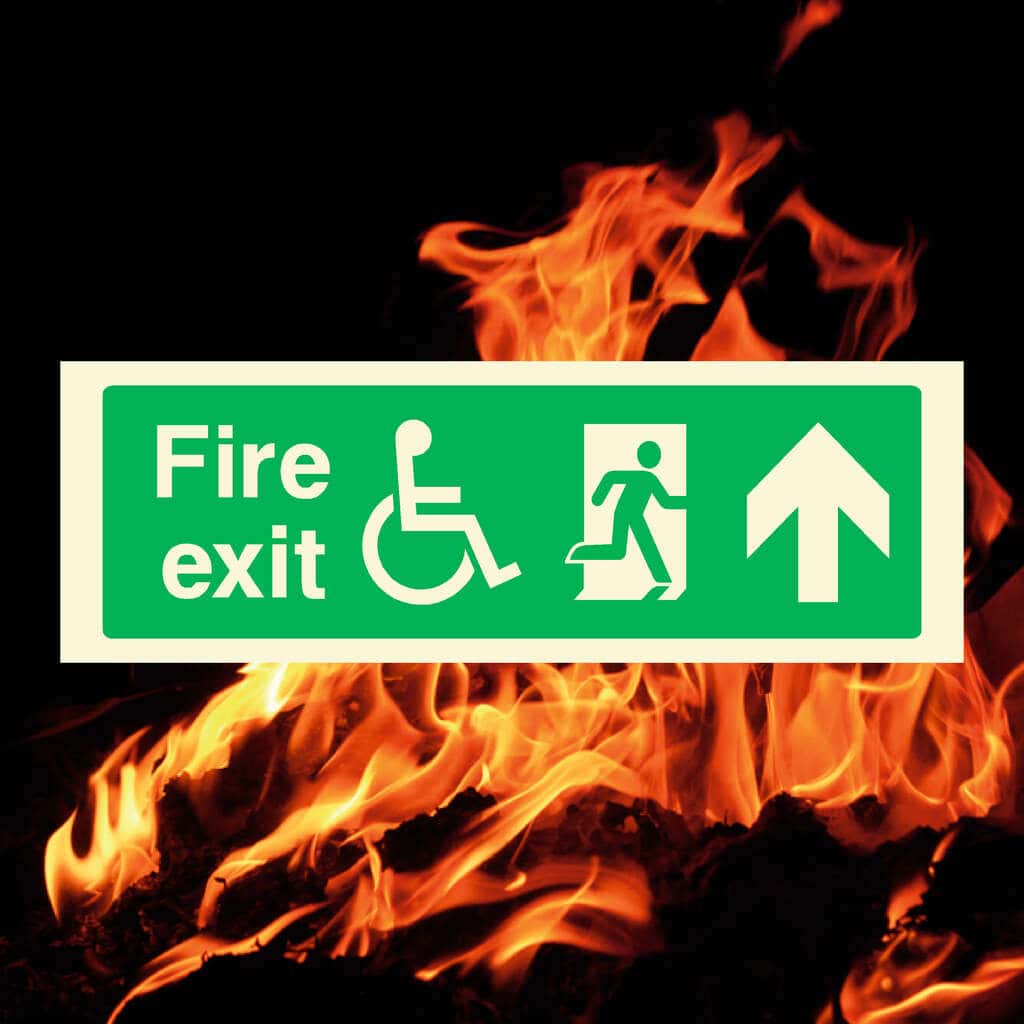
Glow fire exit signs combine recognised escape-route information with photoluminescent material that provides an afterglow when surrounding light levels fall.
Choose the arrow direction according to the actual escape route and position signs so occupants can follow the route towards a place of safety. Our range includes left, right, up, down and other directional fire exit designs.
Photoluminescent fire door signs communicate important instructions such as Fire Door Keep Shut, Keep Locked or Automatic Fire Door Keep Clear while providing increased visibility when lighting levels fall.
The message should reflect the function and fire-safety arrangements of the particular door.
Fire action notices provide important information about what people should do if a fire is discovered or the fire alarm sounds.
Our glow fire action signs use photoluminescent material to help this information remain easier to identify when normal lighting is reduced.
Photoluminescent fire extinguisher signs help identify the location and type of firefighting equipment provided.
Our range includes signs for water, foam, CO2, dry powder and other extinguisher types, together with general Fire Extinguisher and Keep Clear messages.
Not sure which glow fire safety signs you need or where they should be used? Our practical guides explain how photoluminescent fire signs work, what to consider when choosing glow-in-the-dark signage and how lighting, positioning and the type of fire-safety message can affect your choice.
Explore thoughtful guides, inspiration and stories from The Sign Shed.
18 June 2026
Photoluminescent fire signs review for UK buyers - materials, compliance, visibility, placement and where glow signs work best in real premises.
20 August 2026
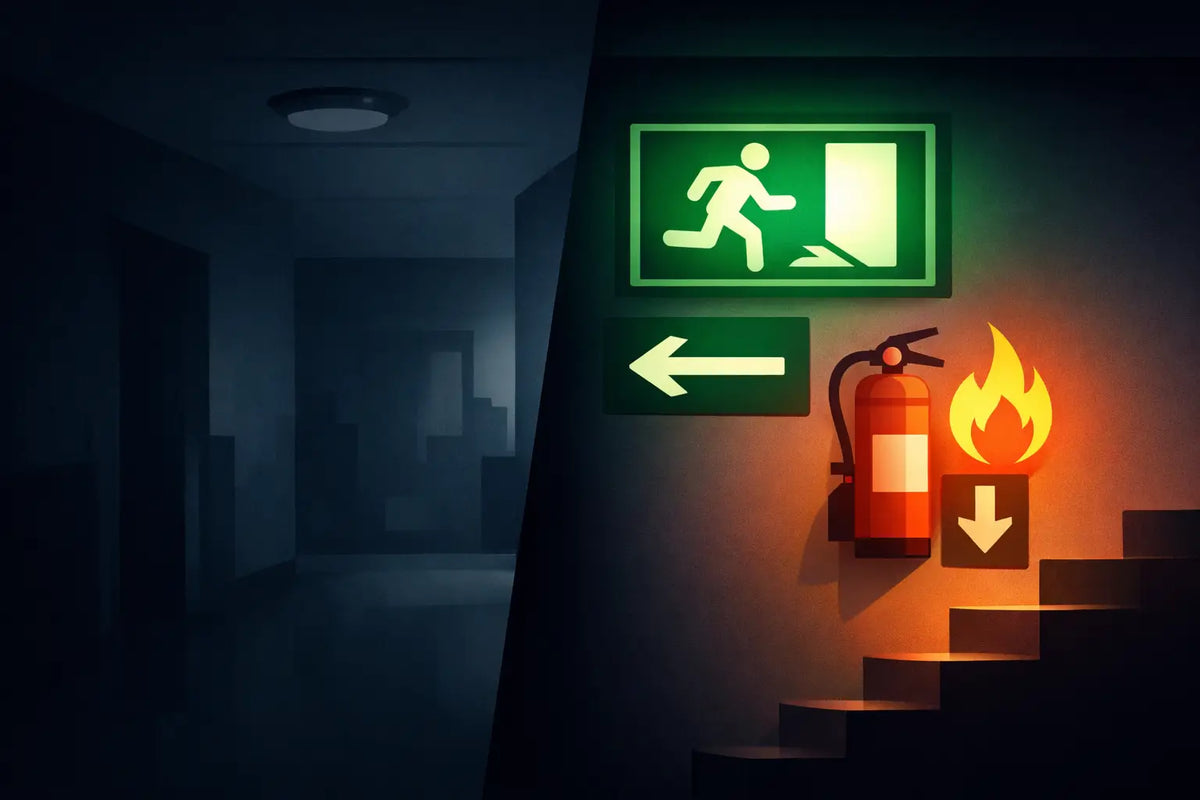
When the lights go out, your fire safety signs shouldn't: choose photoluminescent signs that help occupants locate exits and fire equipment in a bl...