





Which Fire Exit Sign Do I Need for My Premises?
Which fire exit sign do I need? A practical UK guide to escape route arrows, ISO symbols, viewing distances, placement and material choice for ever...
Fire Exit Signs UK
Shop fire exit signs for UK workplaces, offices, warehouses, schools, shops, hospitality venues and public buildings. Clearly mark escape routes, changes of direction and final exits with recognised green-and-white emergency escape signage.
The Sign Shed manufactures a wide range of fire exit signs in Britain, including left, right, up and down directional signs, emergency exit signs, Fire Exit Keep Clear signs and photoluminescent options. Choose from a range of sizes and materials to suit different premises and escape routes.
Choosing the correct fire exit sign starts with the direction people need to travel. Escape-route signage should provide a clear and continuous route so that people can identify where to go without hesitation.
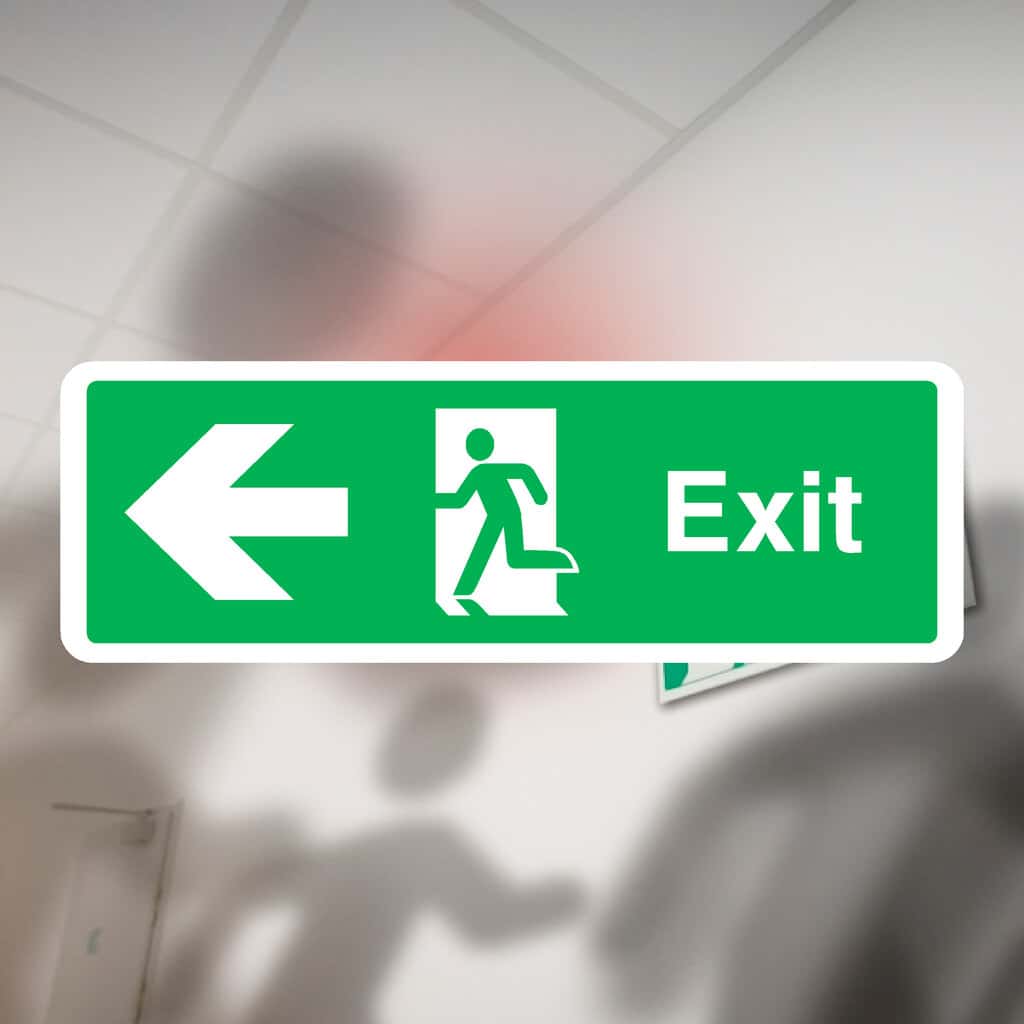
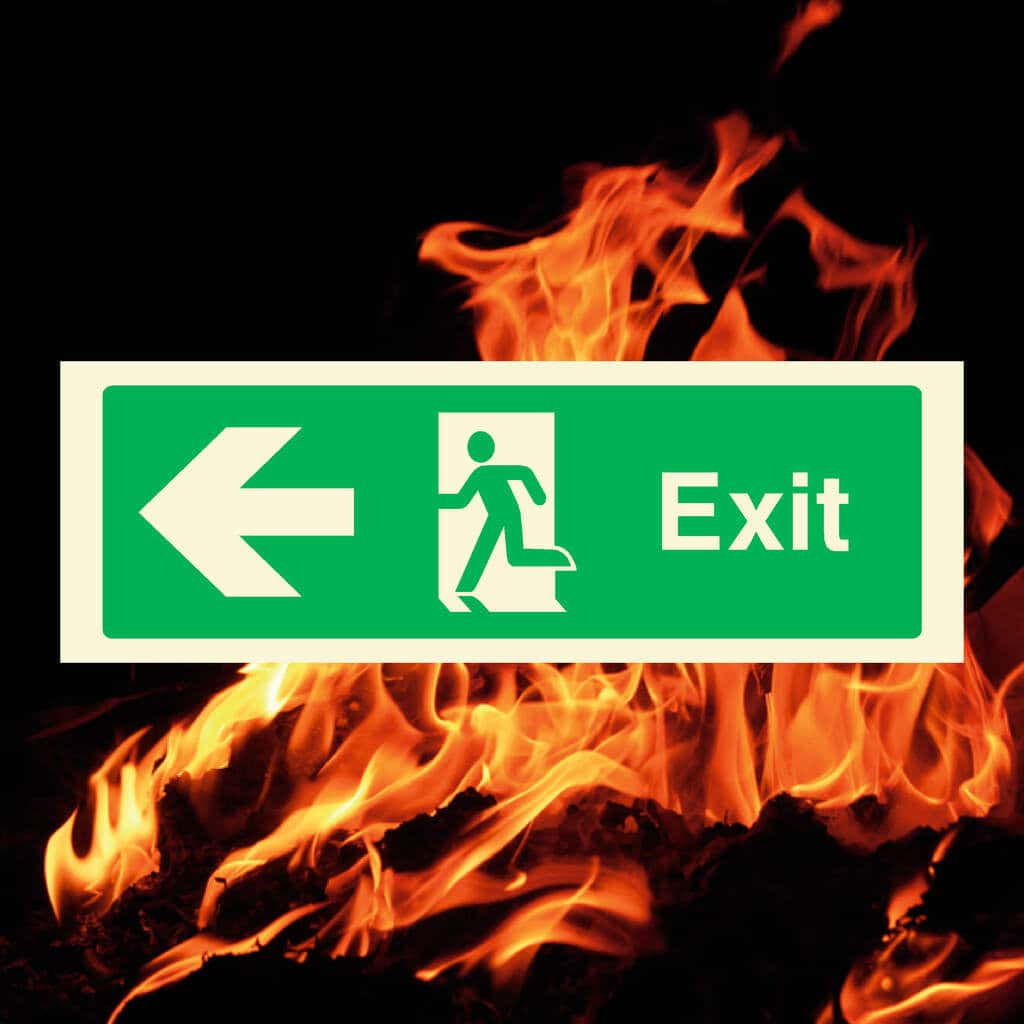
Use Fire Exit Left signs where the escape route requires people to travel or turn left. Position the sign so the direction is clear before someone reaches the decision point.
Use Fire Exit Right signs where the designated escape route continues or turns to the right.
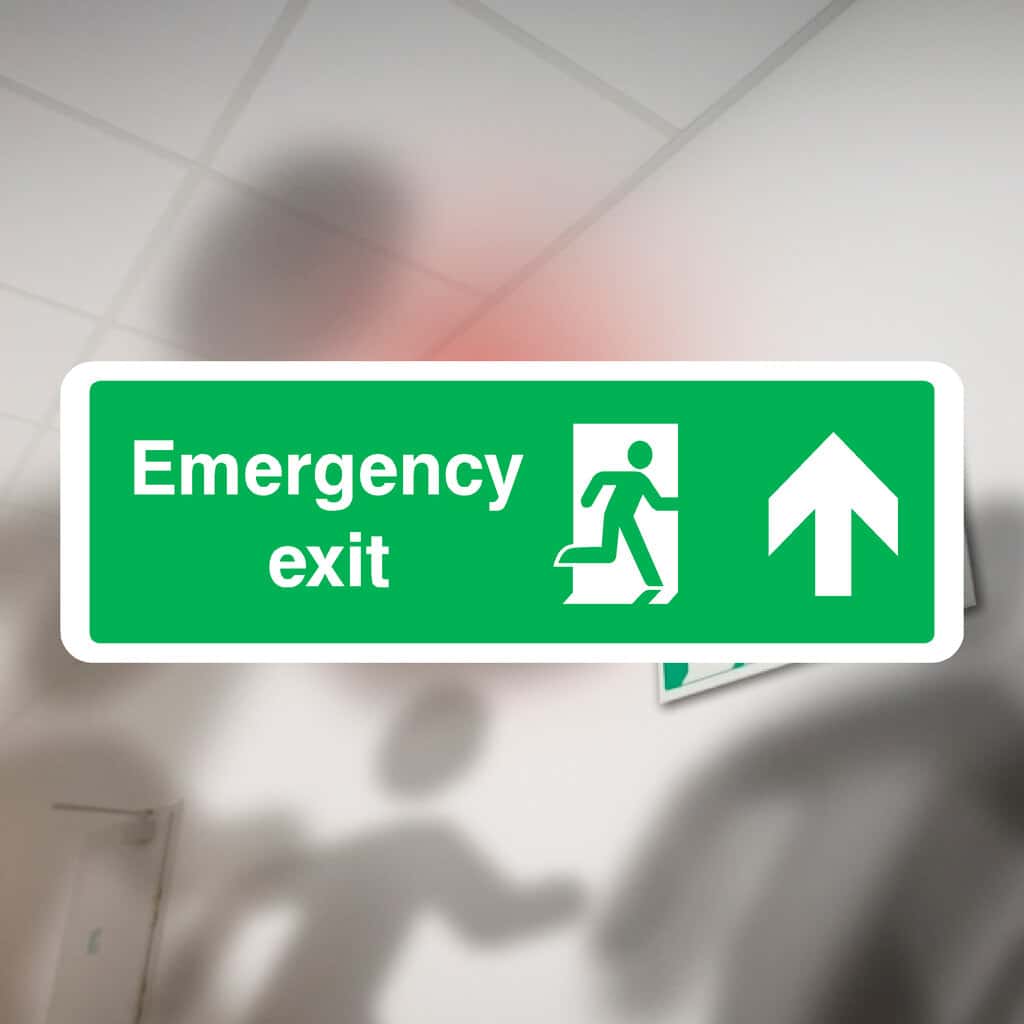
Fire exit signs using an upward directional arrow can indicate onward travel according to the sign's design, positioning and escape-route layout. Make sure the symbol and arrow direction correctly communicate the route from the viewer's position.
Shop Fire Exit Forward Signs →
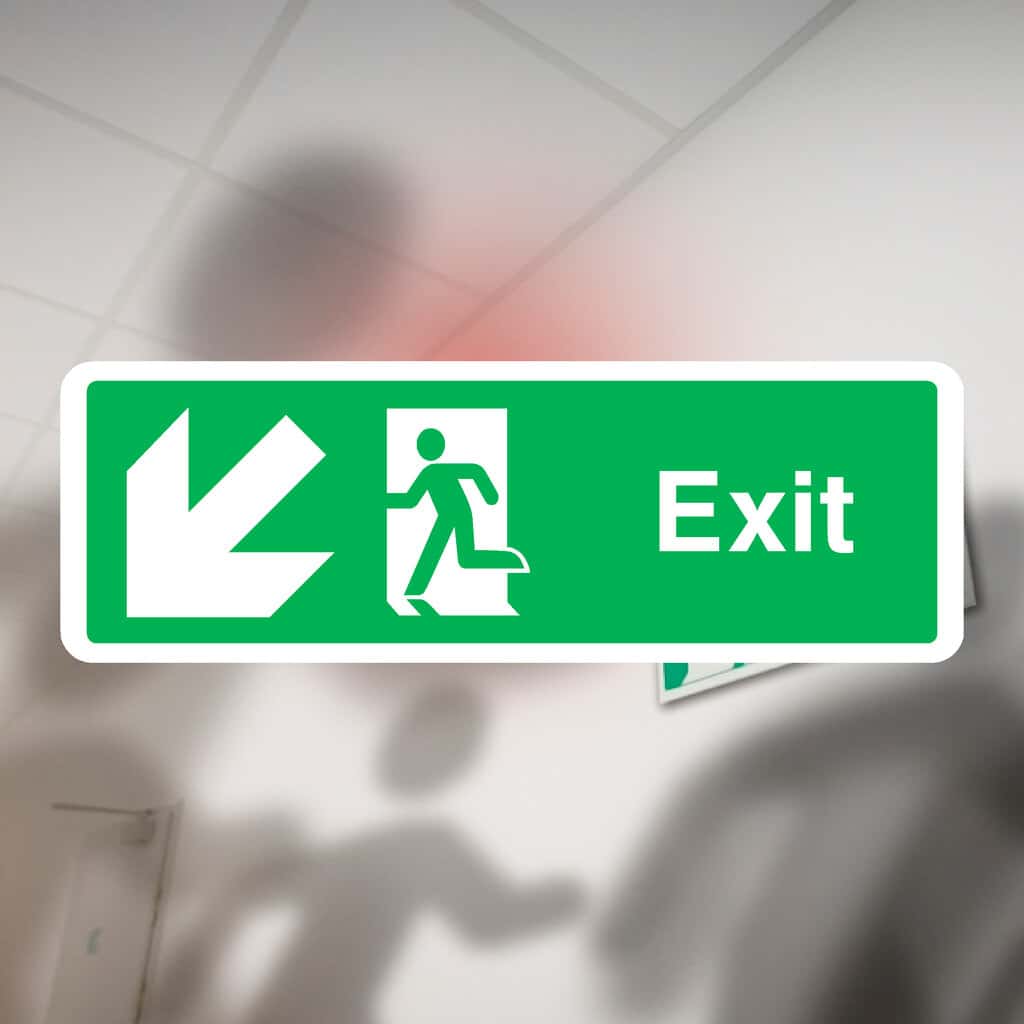
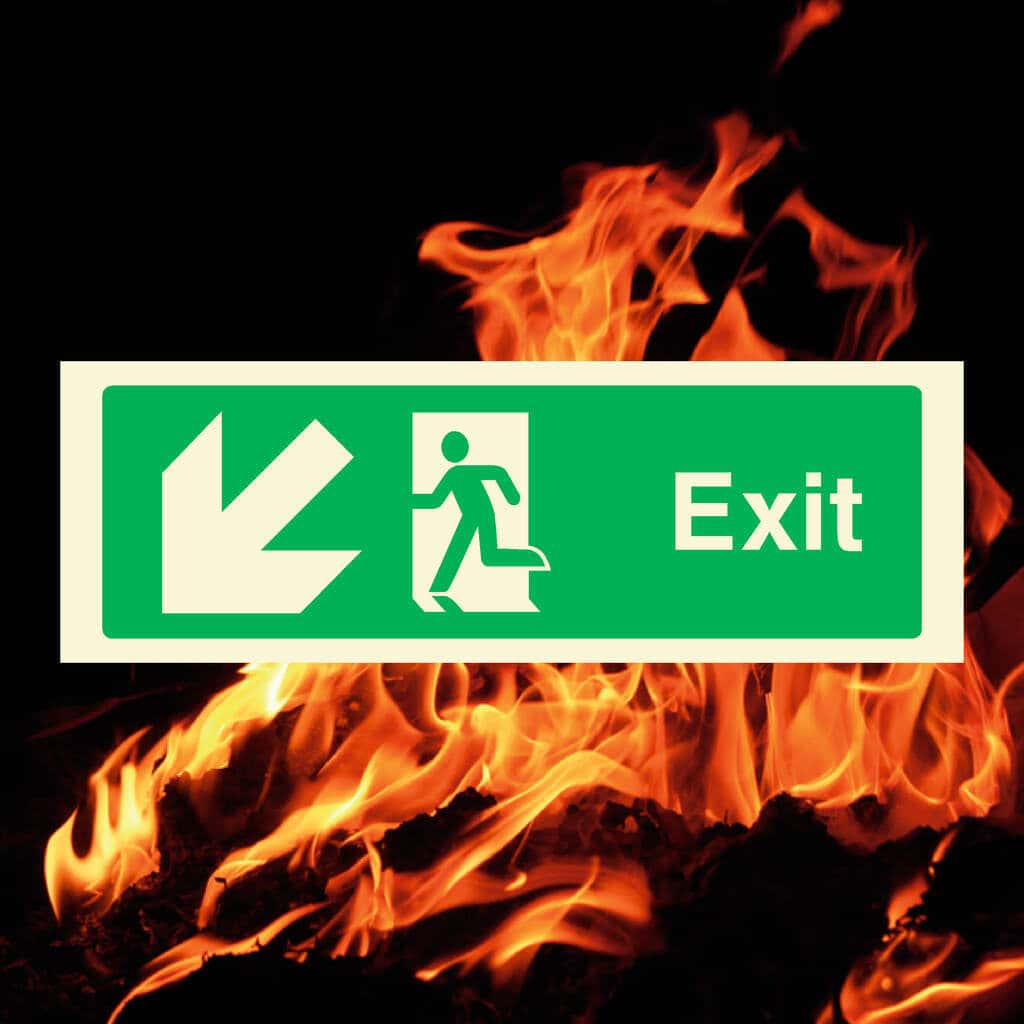
Use the appropriate Fire Exit Down sign where the escape route requires downward travel or where the directional meaning is appropriate to the sign's location and route.
Fire exit signage helps people identify and follow emergency escape routes. The signs required at individual premises should reflect the findings of the fire risk assessment, building layout and escape-route arrangements.
For most non-domestic premises, escape routes and exits should be clearly indicated where necessary so people can find their way to a place of safety.
Fire exit signs may be required above or near final exits, at corridor junctions, stairways, changes of direction and other locations where the escape route would otherwise be unclear.
The important principle is continuity: someone unfamiliar with the building should be able to follow the designated route without being left uncertain about which way to go.
Modern fire exit signage commonly uses the recognised green-and-white emergency escape symbol, incorporating a running-person pictogram and directional arrow.
BS EN ISO 7010 provides standardised safety symbols designed to make safety information consistent and readily recognisable. Using consistent escape-route symbols throughout a building can make the route easier for employees, visitors and contractors to follow.
ISO 7010 is a standard rather than legislation itself. The appropriate signage for your premises should be considered alongside your fire risk assessment and applicable fire-safety requirements.
Position fire exit signs where they can be clearly seen before someone needs to make a decision about the direction of travel.
Depending on the building and escape route, this can include:
Final exit doors, Corridor junctions, Changes of direction, Stairways and landings, Doorways leading onto escape routes, Large or open areas where the route is not immediately obvious, Locations where another doorway could be mistaken for the escape route
Signs should remain visible and unobstructed. Shelving, open doors, displays, equipment and changes to a building layout can all affect whether existing signage still provides a clear route.
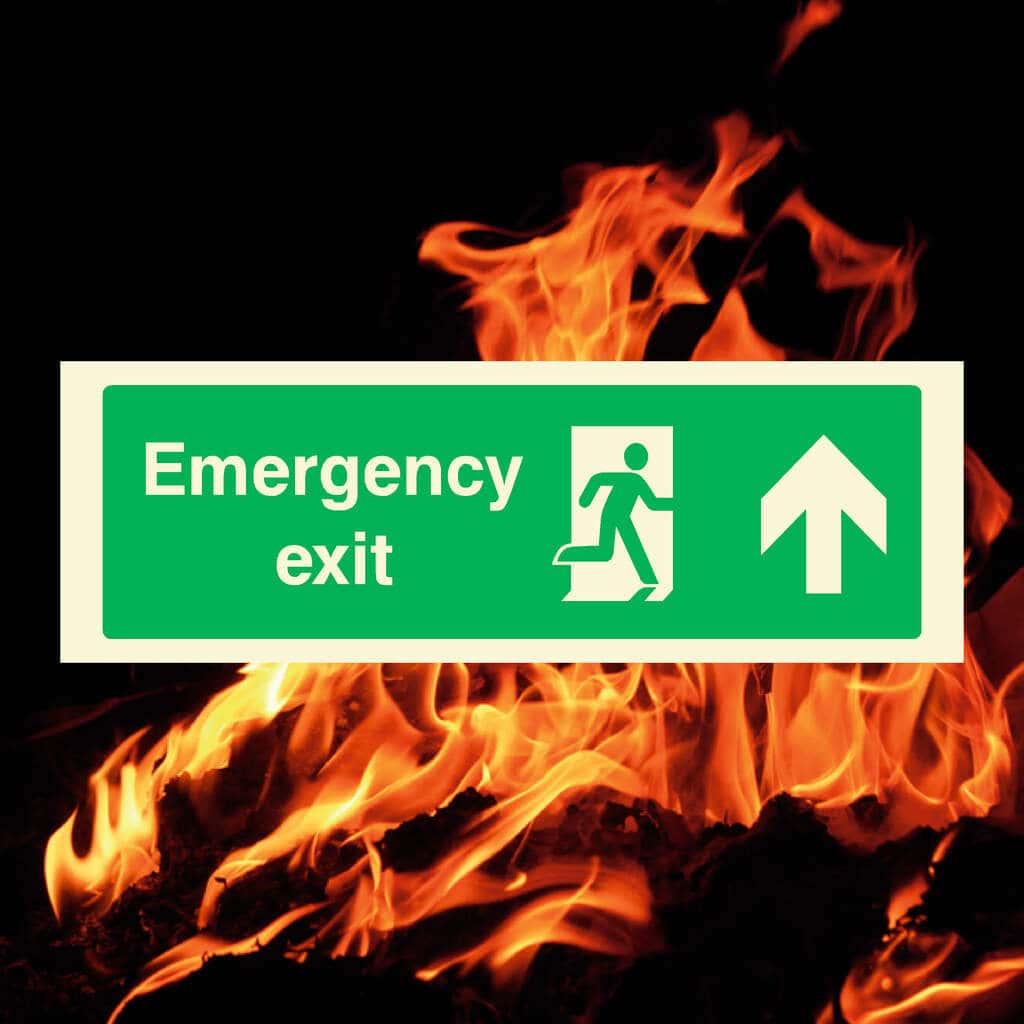
Photoluminescent fire exit signs absorb light and emit a visible glow when surrounding light levels fall. They can provide additional visual guidance in appropriate locations and are available in a range of directional formats.
Photoluminescent signage should be considered as part of the overall escape-route and emergency-lighting arrangements rather than as a substitute for appropriate emergency lighting where that is required.
Before ordering, walk the complete escape route and identify each point where someone could be uncertain about which way to travel.
Check:
The direction of travel, Viewing distance, Sign position and visibility, Size required, Mounting surface, Lighting conditions, Whether a standard or photoluminescent material is appropriate, Whether double-sided signage is needed for visibility from different directions
Using a consistent sign style throughout connected escape routes can make the system easier to follow.
Choose the material according to the location and installation requirements.
Self-adhesive vinyl is suitable for clean, smooth surfaces and many indoor applications.
Rigid plastic provides a durable option for walls, doors and general workplace use.
Aluminium composite offers a strong rigid option for demanding locations.
Photoluminescent material provides a glow effect after exposure to an appropriate light source and can be useful where enhanced visibility in reduced lighting is required.
Ideas, advice and inspiration
Discover useful guides, practical advice and inspiration from The Sign Shed.
Which fire exit sign do I need? A practical UK guide to escape route arrows, ISO symbols, viewing distances, placement and material choice for ever...

Practical fire exit sign guide for UK workplaces. Learn sign types, placement, materials and common mistakes to support safe, clear escape routes.

Learn how to display fire exit signs correctly in UK workplaces, public buildings and sites, with practical guidance on placement and visibility.

Are ISO 7010 fire exit signs mandatory? Check UK duties, replacement triggers and practical steps for clear escape-route signage in any premises to...